
■ Maya Enterprise Case Study / Financial ServicesRegulated AI transformation needs more than agents. It needs orchestration.
Financial services firms are deploying AI into research, compliance, and client advisory workflows. But the real transformation risk is not whether AI can produce output. It is whether employees know what to trust, what to review, what to delegate, and where their human judgment still matters.
Maya Enterprise gives leaders, managers, employees, and approved AI agents the human-context layer required to make AI transformation land.
-
Financial services firms can buy research agents, compliance agents, knowledge assistants, and client-advisory copilots. But agents do not solve the human operating model.
You are expected to:
- improve research productivity;
- strengthen compliance monitoring;
- protect client trust;
- redesign roles around AI oversight and judgment;
- retain high-value institutional knowledge;
- prove transformation ROI without increasing regulatory or people risk.At the same time:
- employees vary in trust, readiness, and AI fluency;
- compliance teams cannot review every AI signal manually;
- advisors must protect relationship nuance;
- managers need to lead humans and AI systems together;
- firms need workforce intelligence before the transformation announcement, not after attrition starts. -
When AI enters regulated financial services workflows without human-context orchestration, the failure modes are predictable.
Common patterns:
- Analysts reread long AI summaries because they do not know which claims matter.
- Compliance teams receive more AI alerts but still have to decide manually what is material.
- Advisors over-edit AI-generated client materials because tone, trust, and regulatory sensitivity are unclear.
- Managers rely on gut feel to identify who can move into AI oversight roles.
- Employees at risk of disengagement are discovered too late.
- Internal mobility candidates are missed because skills data does not capture identity fit or transition readiness.The result is avoidable review burden, quality variance, and people risk.
-
Financial services teams need a human-context layer that connects workforce readiness, role transition, AI workflow design, and agent governance.
In practice, that means:
Workforce Reinvention Assessment. Maya identifies who is ready, who needs support, and who is at risk before programme announcement.
Transition Blueprint. Every affected employee receives a 30/60/90-day pathway into future-fit work.
Work Contract. Maya defines what the human owns, what AI can do, and when review or escalation is required.
Context Capsule. Approved AI agents receive only the minimum necessary task, role, company, policy, and work-preference context.
Review Map. AI outputs are translated into Must Read, Skim, Ignore, Human Decision, or AI Can Proceed.
Transformation Dashboard. Leaders see readiness, headcount risk, transition velocity, internal mobility, and intervention priorities.

Meridian Capital Partners: Workforce Reinvention Intelligence in Financial Services
Success Story
This Maya Enterprise simulation shows how a 1,200-person UK investment management and corporate advisory firm could de-risk AI-driven transformation before announcing workflow change to its people. Across a 312-employee cohort in Research, Compliance, and Client Advisory, Maya deployed its identity-aware intelligence architecture to assess reinvention readiness, identify high-risk disengagement and departure signals, surface internal mobility opportunities, and generate personalised 30/60/90-day transition plans for every affected employee. The simulation identified 34% of the cohort as High or Critical Risk, addressed £4.2M in estimated people failure exposure, and became operational within 28 days. Beyond workforce diagnostics, the case study points toward Maya’s broader role as a Human-AI orchestration layer: helping enterprises understand not only which workflows AI will transform, but how each employee should be supported, redeployed, coached, and paired with AI systems so transformation lands in the workforce rather than breaking against it.
REGULATED AI WORKFLOWS
•
CLEARER REVIEW BURDEN
•
REGULATED AI WORKFLOWS • CLEARER REVIEW BURDEN •
STRONGER HUMAN JUDGMENT
•
SAFER AGENT CONTEXT
•
STRONGER HUMAN JUDGMENT • SAFER AGENT CONTEXT •
REGULATED AI WORKFLOWS
•
CLEARER REVIEW BURDEN
•
REGULATED AI WORKFLOWS • CLEARER REVIEW BURDEN •

Getting started is simple
Maya Enterprise can be piloted before a major AI transformation announcement or inside one affected function. Start with a cohort in Research, Compliance, Client Advisory, or another high-value workflow where AI will change roles, review burden, and decision rights.
Step 1: Configure transformation context
Load the affected cohort, transformation timeline, target operating model, future roles, AI workflow changes, and relevant HRIS or workforce data. Maya establishes the baseline for readiness, risk, and role transition.
Step 2: Assess the affected workforce
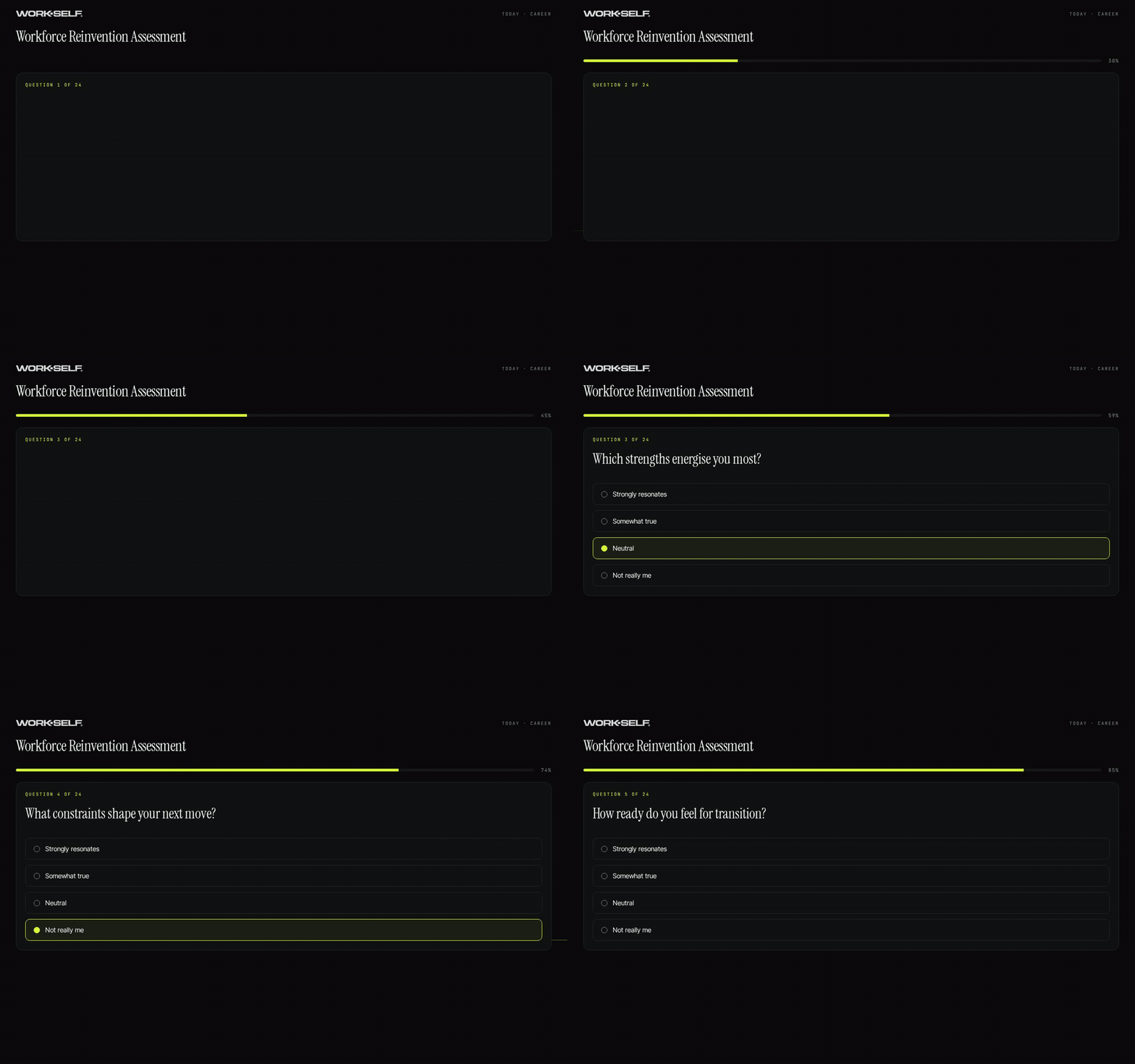
Employees complete the Workforce Reinvention Assessment. Maya maps readiness, working style, confidence, adaptability, identity fit, and support needs against the future operating model.
Step 3: Generate transition intelligence
Maya creates Transition Blueprints, risk classifications, internal mobility recommendations, manager action guidance, and CHRO-level reporting. Leaders know where to intervene before friction becomes attrition.
Step 4: Pilot AI-human orchestration in one workflow
Maya can extend the workforce intelligence into Work Contracts, Context Capsules, and Review Maps for one regulated workflow such as research synthesis, compliance monitoring, or client-advisory documentation.
What financial services teams get
Maya connects transformation plans, employee readiness, manager action, and AI-agent context across regulated workflows.
■ Identity-aware workforce intelligenceStart with the Workforce Reinvention Assessment
Maya assesses affected employees against the future operating model, role changes, AI workflow pressure, readiness, working style, and support needs. The output is not a morale survey. It is decision-grade transition intelligence before the announcement.
■ Internal mobility and role transitionMap AI-augmented role pathways
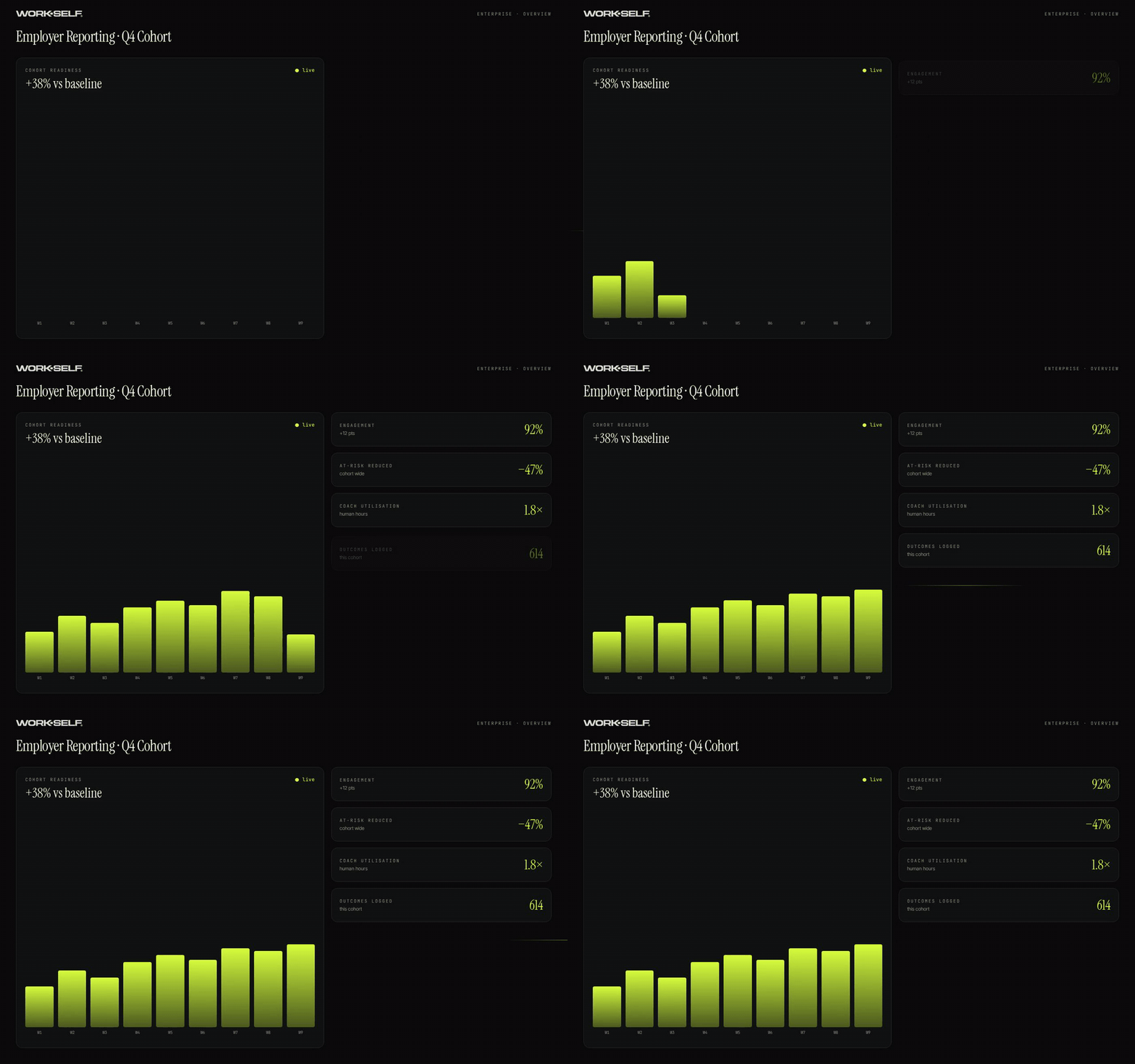
Maya identifies which employees can move into AI Model Governance, Client Intelligence, Relationship Management, compliance oversight, and other AI-augmented roles based on more than skills alone: identity fit, readiness, motivation, and transition probability.

■ AI-human workflow orchestrationOrchestrate regulated AI workflows
Maya defines how humans and agents work together in research, compliance, and client advisory: what AI can draft, what humans must review, when risk escalates, and what context agents are allowed to use.
■ C-suite and manager visibilitySee readiness and intervention priorities clearly
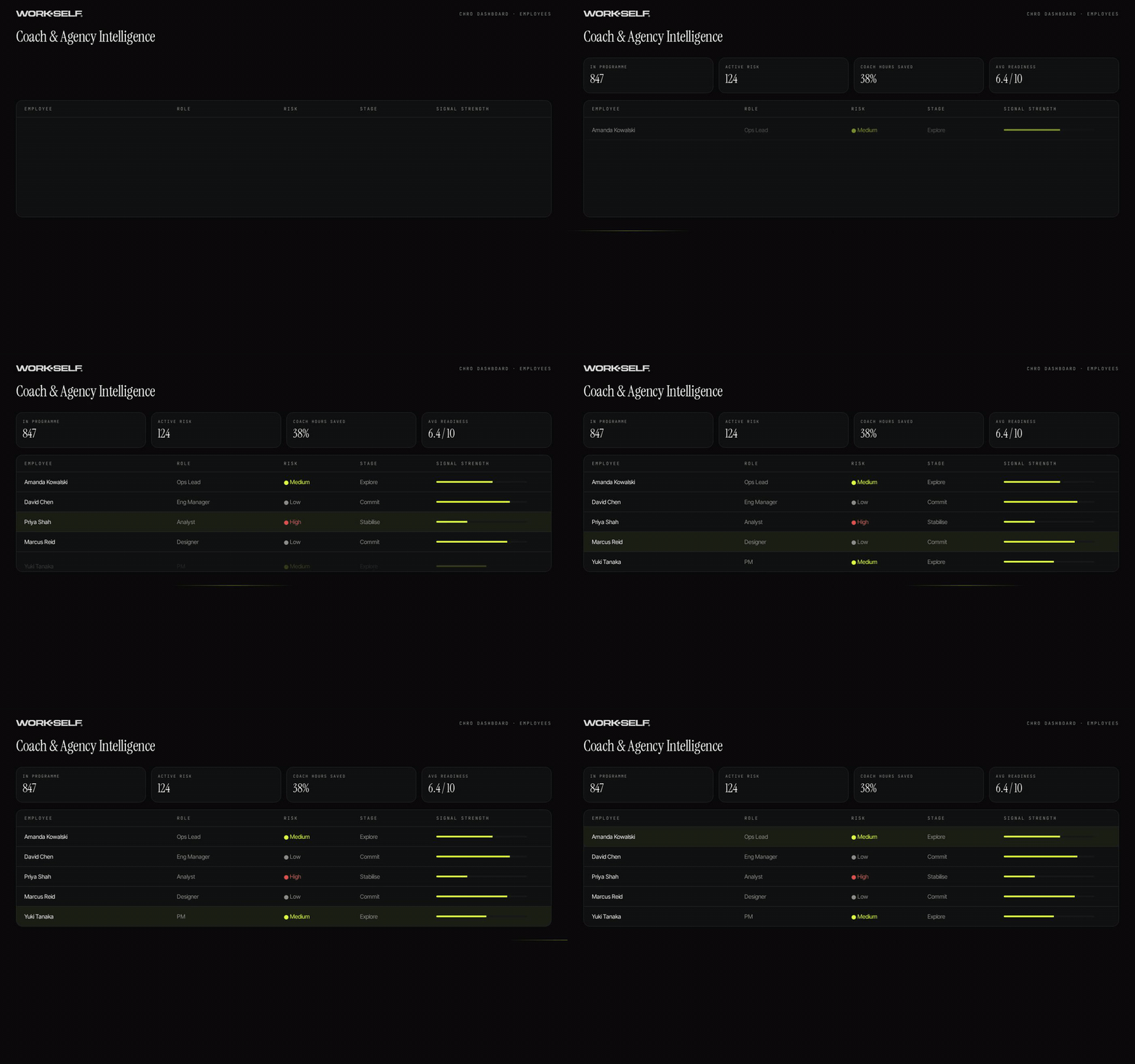
The Transformation Dashboard gives leaders a board-ready view of transition velocity, headcount risk, organisational readiness, Maya coverage, risk-cost exposure, and cohort progress. Managers see who needs support and what intervention should happen next.
■ Governed human contextProtect trust while improving agent collaboration
Maya translates employee identity and work preferences into operational context, not surveillance. Employees should understand what is used, managers receive support signals, and approved agents receive only task-relevant context with auditability and boundaries.

Accelerate regulated AI transformation without losing the human edge
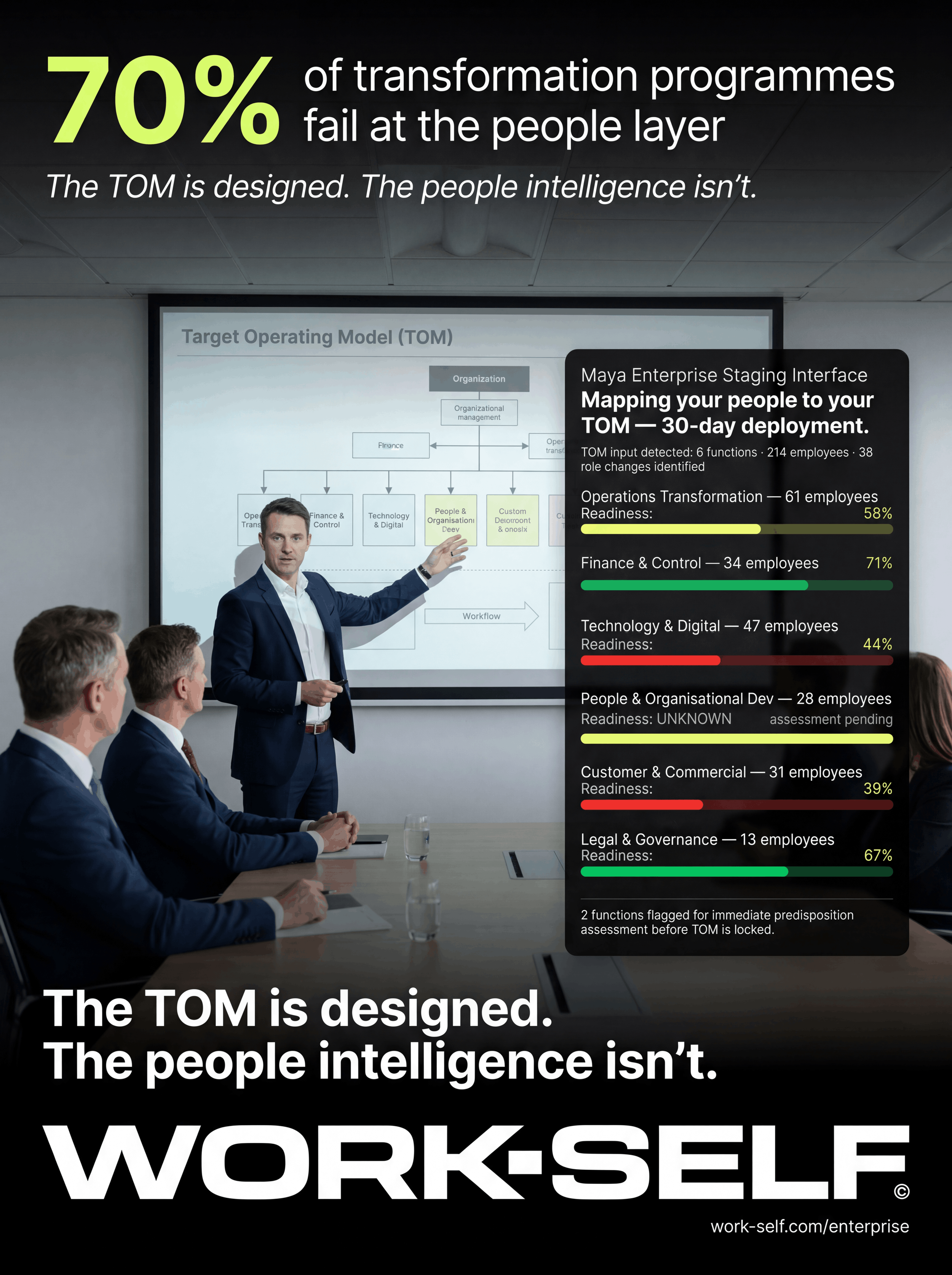
Start with one affected cohort or one regulated workflow. Maya shows who is ready, who needs support, where internal mobility exists, and how AI should collaborate with the humans responsible for judgment, compliance, and client trust.
Explore a partnership
If you’re interested in piloting WORK-SELF in your organisation, we’re happy to explore what a partnership could look like.