
■ Maya Enterprise Use Case / Professional ServicesAI is changing client delivery. Maya keeps the human system intact.
Professional services firms are adopting AI to accelerate research, proposals, analysis, drafting, quality review, and client communication. But the operating model is breaking in a new place: humans are becoming the manual orchestration layer between AI output and trusted client work. Maya Enterprise helps firms decide what AI can do, what humans must own, when managers should intervene, and how every employee transitions into AI-augmented delivery.
-
Professional services firms are being asked to deliver faster without weakening client trust, apprenticeship, quality, or judgment. AI can draft, summarise, compare, and generate options, but it does not automatically know which human should review what, where client sensitivity lives, when partner judgment is required, or which employee should be learning rather than delegating.
You are expected to:
- accelerate client delivery;
- protect quality and reputation;
- train junior talent in an AI-shaped workflow;
- manage risk across proposals, research, analysis, and client communication;
- make AI useful without turning managers into manual AI supervisors.At the same time:
- AI output quality varies;
- review burden often increases rather than decreases;
- decision rights are unclear;
- client context and employee context are scattered;
- teams do not know what to trust, rewrite, escalate, or ignore. -
When AI is added to client work without an orchestration layer, the work may move faster locally but become slower systemically.
Common failure patterns:
- Associates reread entire AI drafts because they do not know what is safe.
- Managers rewrite AI output instead of reviewing exceptions.
- Partners become the final quality firewall for too much low-value work.
- Teams prompt in micro-steps because trust and autonomy are unclear.
- Context is lost between versions, channels, and reviewers.
- Junior employees lose learning reps as AI absorbs the work that used to build judgment.
- Client-facing quality becomes inconsistent across teams.The hidden cost is not AI adoption. It is unmanaged human review burden.
-
Teams need AI-human workflow design, not another disconnected AI tool.
In practice, that means:
Clear work ownership. Maya defines what the human owns, what AI can do, what the manager reviews, and where partner judgment is required.
Right-sized context for agents. Maya creates Context Capsules so approved AI systems receive the minimum necessary task, client, firm, and human-work-preference context.
Review maps for every AI output. Maya tells employees what to read, skim, ignore, decide, or delegate.
Autonomy modes. Maya makes it clear whether AI is in Manual, Copilot, Delegated, or Autopilot mode.
Learning protection. Maya identifies work the employee should still practice because it builds future judgment.
This is the difference between adopting AI and orchestrating human-AI client delivery.

LOWER REVIEW BURDEN
•
FEWER CONTEXT RESTARTS
•
LOWER REVIEW BURDEN • FEWER CONTEXT RESTARTS •
STRONGER CLIENT DELIVERY QUALITY
•
PROTECTED HUMAN JUDGMENT
•
STRONGER CLIENT DELIVERY QUALITY • PROTECTED HUMAN JUDGMENT •
BETTER MANAGER EXCEPTIONS
•
FASTER AI-ASSISTED DELIVERY
•
TRUSTED CLIENT OUTPUTS
•
BETTER MANAGER EXCEPTIONS • FASTER AI-ASSISTED DELIVERY • TRUSTED CLIENT OUTPUTS •
What your delivery teams get
Maya gives each role the right surface: employee guidance, manager exceptions, partner oversight, and agent-ready human context.
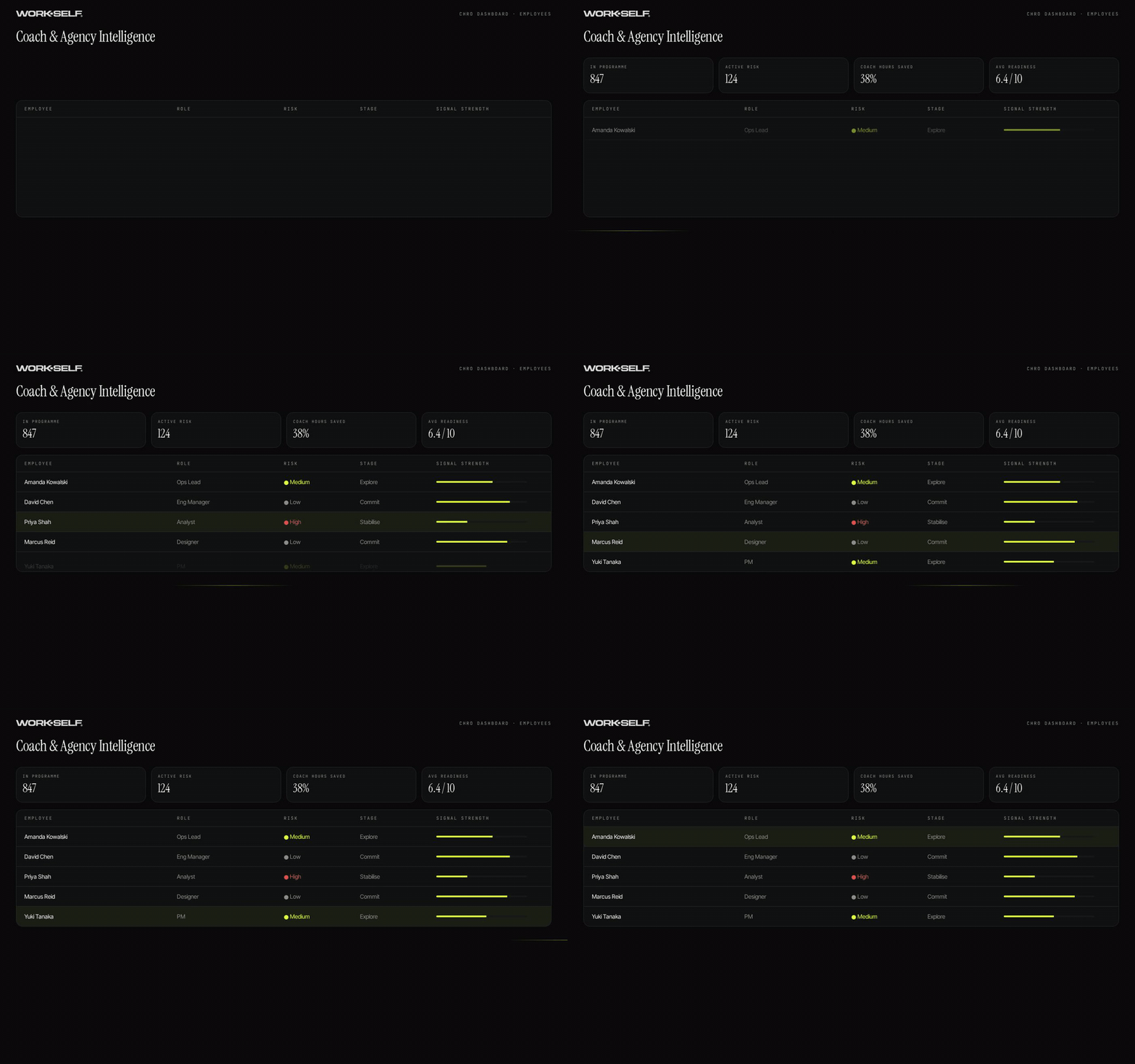
■ Human-AI work designMap the Work Contract
Maya defines the operating agreement for each client-delivery workflow: what AI can do, what the employee owns, when the manager reviews, when partner judgment is required, and what must never be automated. This turns AI adoption into an explicit work system instead of a chain of ad hoc prompts and reviews.
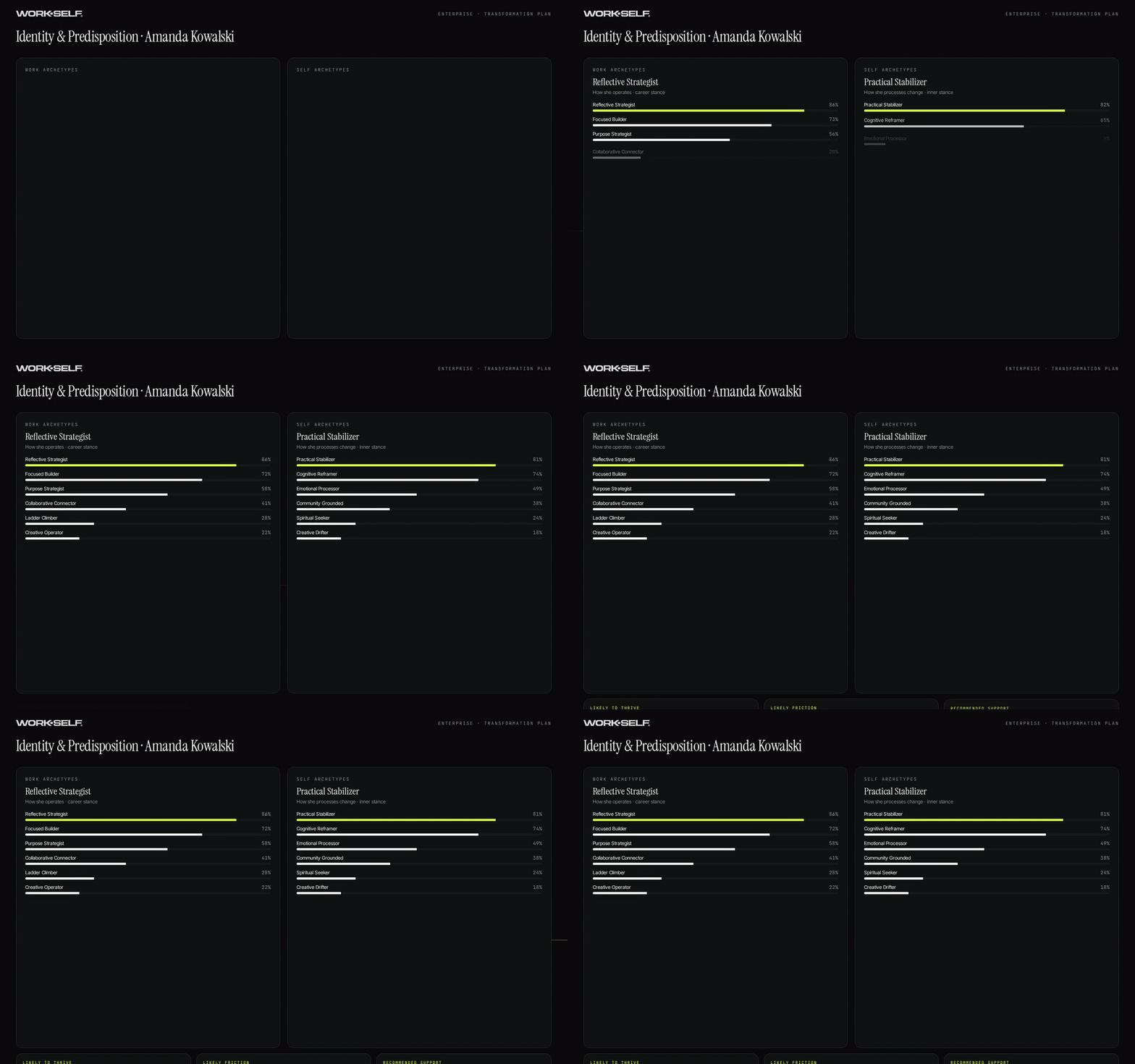
■ Agent-ready human contextGive agents the right Context Capsule
Approved AI agents do not need unlimited access to personal or client data. Maya packages the minimum necessary task, client, firm policy, role, and work-preference context so AI can collaborate more effectively while respecting boundaries.
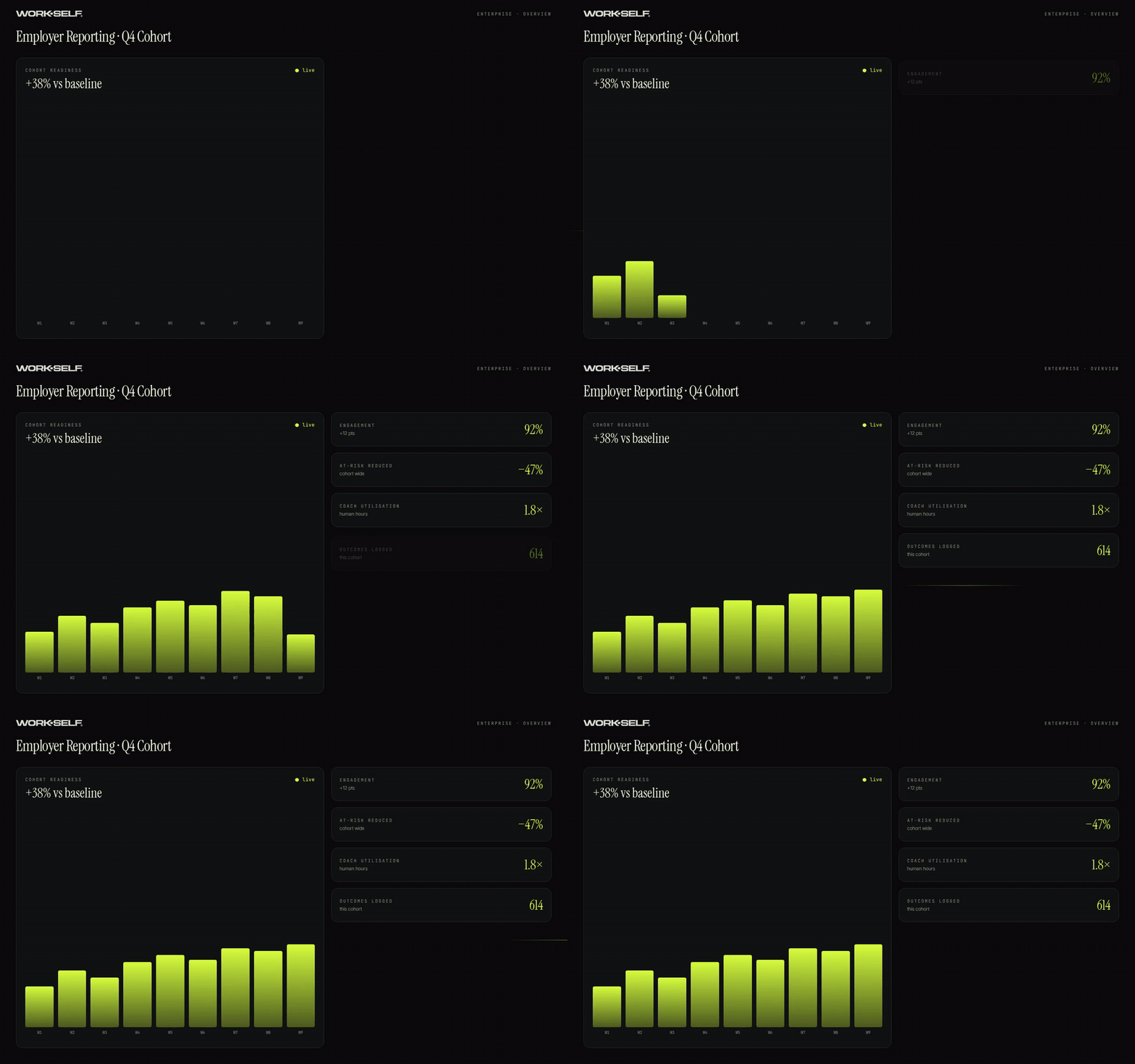
■ Learning and human judgment loopProtect the work humans still need to learn
Maya does not simply automate everything it can. It identifies which work should remain human-led because it builds judgment, client sensitivity, advisory skill, or future leadership capacity. The result is faster delivery without hollowing out the apprenticeship model.
■ Review burden intelligenceSee what actually needs human review
Maya converts AI output into a Review Map: Must Read, Skim, Ignore, Human Decision, or AI Can Proceed. Teams spend less time rereading everything and more time applying judgment where it matters.


Getting started is simple
Maya Enterprise can be piloted inside one high-value client-delivery workflow without redesigning the entire firm. Start with a proposal, research, analysis, or account-planning workflow where AI is already being used and human review burden is visible.
Step 1: Select one client-delivery workflow
Choose a workflow where AI output already enters client work, such as proposals, research synthesis, account planning, client reporting, or deliverable review. Maya maps the current human-AI handoffs and identifies where review burden, context loss, or decision-right confusion appears.
Step 2: Capture employee work context
Employees complete the Workforce Reinvention Assessment and Work-Self Passport inputs relevant to the pilot workflow. Maya identifies work preferences, transition readiness, human-edge zones, support needs, and review styles without exposing private identity data as a manager surveillance tool.
Step 3: Activate Work Contracts and Review Maps
Maya defines who owns what across human, AI, manager, partner, and enterprise policy. AI-generated work receives Review Maps so employees know what to read, skim, ignore, decide, or delegate.
Step 4: Report orchestration outcomes
After the pilot period, leaders see where Maya reduced review burden, improved decision clarity, surfaced transition support needs, and protected human judgment. The firm can then expand Maya across adjacent client-delivery workflows.
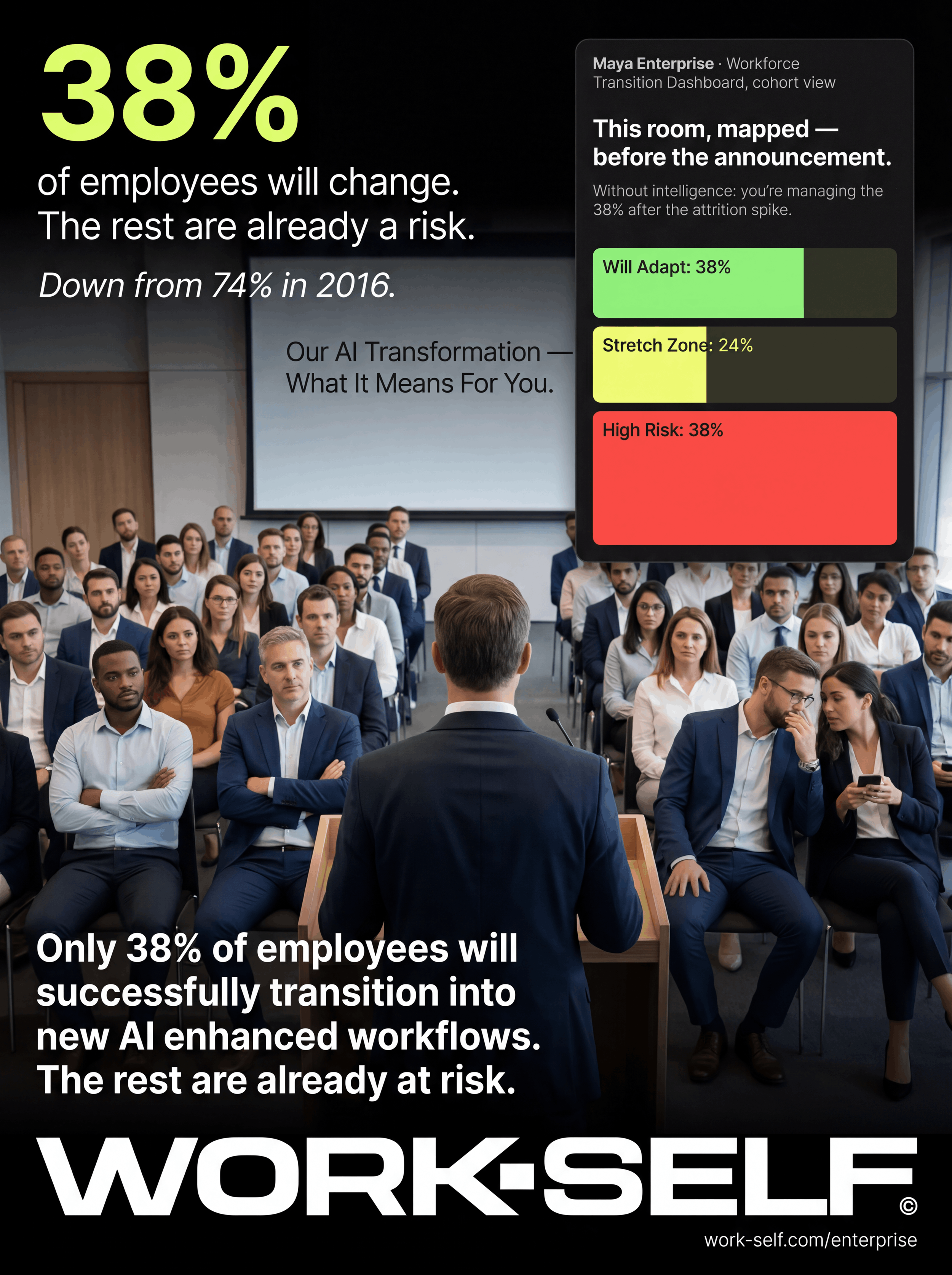
Run the Workforce Reinvention Assessment before the announcement
Every organisation in an AI transformation has the same problem. They know what the new workflow looks like. They do not know which employees will land on the right side of it.
Maya Enterprise deploys across your affected cohort in 28 days. Before the programme is announced, you have a complete readiness map: who will adapt, who needs support, and who is already at risk of quiet exit.
The boardroom conversation shifts from "how do we communicate the change?" to "which employees need intervention before we make it?"
Explore a Maya Enterprise pilot
If your firm is already using AI across proposals, research, analysis, or client communication, Maya can help turn that activity into an orchestrated human-AI delivery system. We can start with one workflow, one cohort, and one measurable review-burden or transition-readiness problem.