
■ Maya Enterprise Case Study / TECHNOLOGY INDUSTRYAgentic workflows need more than better models. They need human context.
Technology companies are moving from using AI tools to supervising AI-driven workflows across product and engineering, customer success, and sales and go-to-market. But the transformation risk is not whether an agent can produce output. It is whether the employee responsible for the outcome can accept it, govern it, and use it without doing the work twice.
Maya Enterprise gives leaders, managers, employees, and approved AI agents the human-context layer required to make AI transformation land.
-
Technology firms can buy coding assistants, service agents, research copilots, and workflow automation. None of them solve the human operating model. An agent does not know which employee owns this task, which review route applies, when to escalate, or which deadline was agreed. So a person supplies that context manually — every time.
You are expected to:
convert agent deployment into measurable operating capacity;
ship faster without weakening quality, security, or customer trust;
redesign roles around AI oversight and judgment;
retain institutional and systems knowledge through restructuring;
keep the junior pipeline intact while AI absorbs entry-level execution;
prove automation ROI to a board that has already approved the spend.
At the same time:
agent output quality varies by task and by context;
review burden often rises rather than falls;
decision rights between human and agent are undefined;
work is routed to the wrong owner and corrected after the fact;
employees become the manual quality-control layer for AI;
the efficiency gain evaporates at the handoff.
-
When agents are deployed into technology workflows without human-context orchestration, the failure mode is not bad output. It is output the accountable human cannot accept as-is.
Common patterns:
Engineers rewrite AI-drafted specs, tickets, and PRs because the agent does not know the team's conventions, constraints, or who actually owns the review.
Support teams rewrite AI-drafted replies because the agent has no read on account sensitivity, tone, or when to escalate.
AEs discard AI-generated summaries and outreach because the context misses deal stage, champion, and what was already promised.
Ownership and review routes are implicit, so the same task gets reviewed twice or shipped unreviewed.
Managers guess who can supervise agents instead of doing the work themselves, because readiness is invisible.
High performers disengage under the extra review load and it shows up as attrition, not as a signal.
The result is rework disguised as productivity: more output, more review, no more capacity.
-
Three things, in order. Define the operating model before you scale the agents: what an agent may draft, what a human must review, when risk escalates, and who owns the outcome. Give agents governed context about the work and the people around it, so output arrives with its reasoning attached and review takes minutes rather than hours. And treat readiness as something you measure rather than something you assume, because trust, fluency, and identity fit vary far more inside an engineering organisation than most leadership teams expect.
Teams that do this get compounding adoption. Teams that skip it get a pilot that stalls at the moment senior people stop believing the output.

Novara Technologies: Improving ROI in Agentic Workflows
Case Study
This Maya Enterprise case study shows how a 1,300 person UK enterprise SaaS company, representing the WORK-SELF technology cluster across Product and Engineering, Customer Success, and Sales and GTM, could convert agent output into accepted work rather than extra work. Takara.ai, acting as independent testing agent, designed, ran, and scored a standardised test across 50 employees, 360 employee by task Work Contracts, and 42 test cases spanning seven customer service task categories. The same AI model, tasks, test cases, and scoring were held constant in both groups. The only variable was whether the agent received Maya context for that specific employee and that specific task. With Maya, employee correction rounds fell from three to two, a 33% reduction in rework. Adherence to the agreed rules governing ownership, review route, escalation, and deadline rose from 32% to 74%, and all seven task categories improved, with the largest gains on the work requiring the most human judgement. For Novara, that reduction in rework returns 112,000 skilled hours and £5.38M in annual labour value.
ACCEPTED AGENT OUTPUT
•
CLEARER REVIEW BURDEN
•
ACCEPTED AGENT OUTPUT • CLEARER REVIEW BURDEN •
STRONGER HUMAN JUDGMENT
•
SAFER AGENT CONTEXT
•
STRONGER HUMAN JUDGMENT • SAFER AGENT CONTEXT •
ACCEPTED AGENT OUTPUT
•
LESS REWORK PER TASK
•
ACCEPTED AGENT OUTPUT • LESS REWORK PER TASK •

Getting started is simple
Maya Enterprise can be piloted before a major AI transformation announcement or inside one affected function. Start with a cohort in Customer Success, Product and Engineering, Sales and GTM, or another high-value workflow where AI will change roles, review burden, and decision rights.
Step 1: Configure transformation context
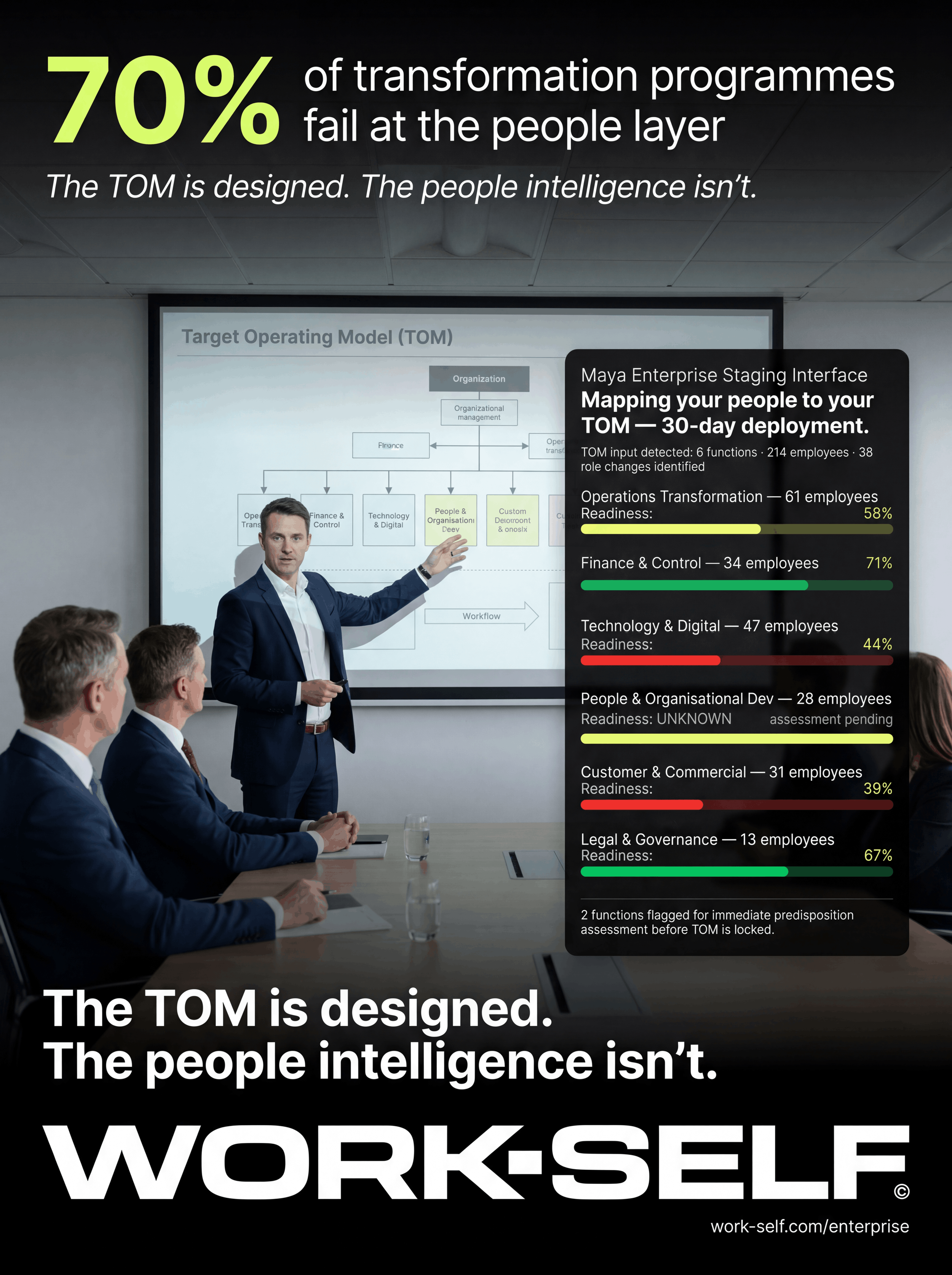
Load the affected cohort, transformation timeline, target operating model, future roles, AI workflow changes, and relevant HRIS or workforce data. Maya establishes the baseline for readiness, risk, and role transition.
Step 2: Assess the affected workforce
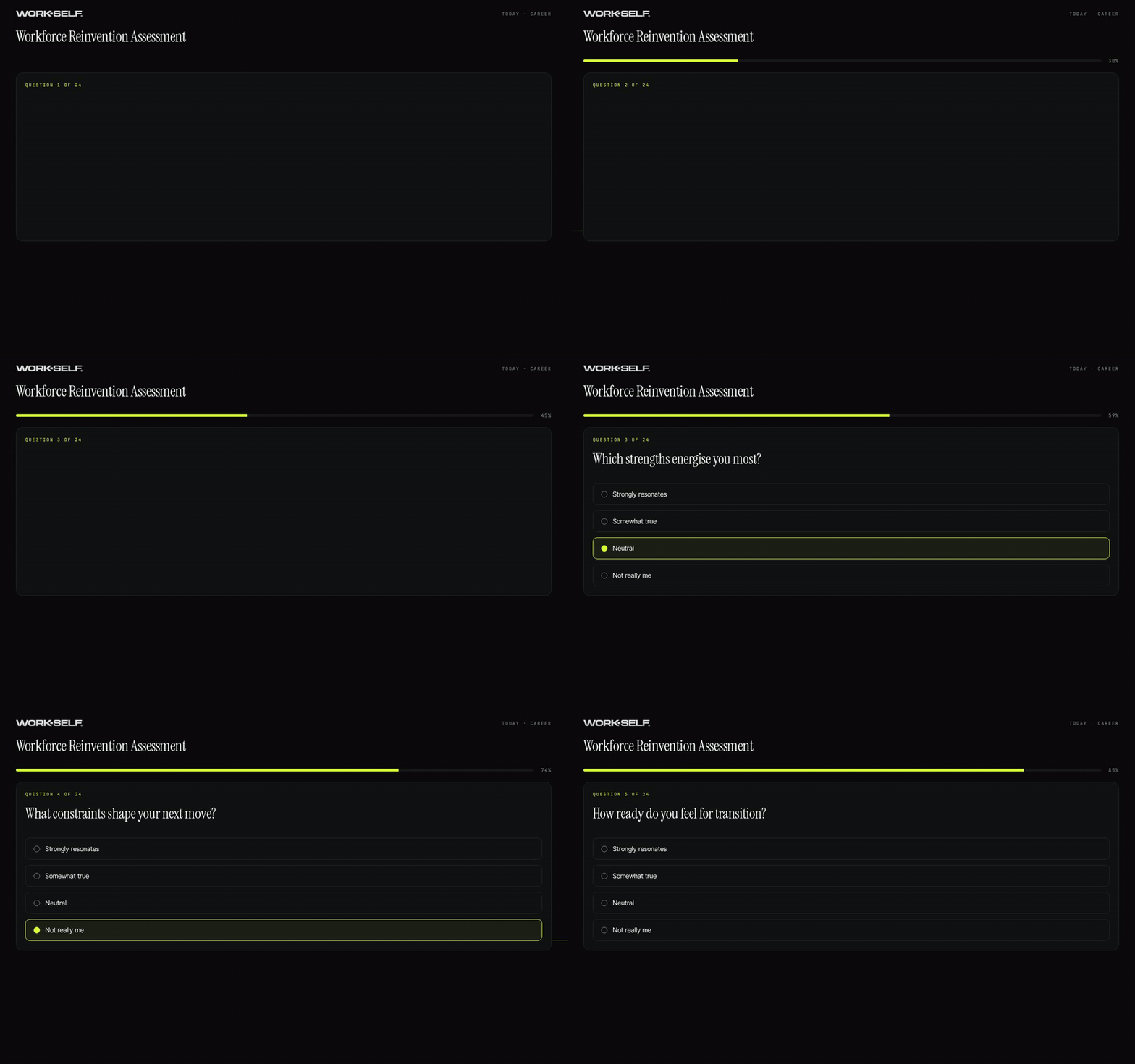
Employees complete the Workforce Reinvention Assessment. Maya maps readiness, working style, confidence, adaptability, identity fit, and support needs against the future operating model.
Step 3: Generate transition intelligence
Maya creates Transition Blueprints, risk classifications, internal mobility recommendations, manager action guidance, and CHRO-level reporting. Leaders know where to intervene before friction becomes attrition.
Step 4: Pilot AI-human orchestration in one workflow
Maya can extend the workforce intelligence into Work Contracts, Context Capsules, and Review Maps for one workflow such as customer support resolution, spec and ticket drafting, or account research and outreach.
What technology teams get
Maya connects transformation plans, employee readiness, manager action, and AI-agent context across the workflows where agents and humans share the work.
■ Identity-aware workforce intelligenceStart with the Workforce Reinvention Assessment
Maya assesses affected employees against the future operating model, role changes, AI workflow pressure, readiness, working style, and support needs. The output is not a morale survey. It is decision-grade transition intelligence before the announcement.
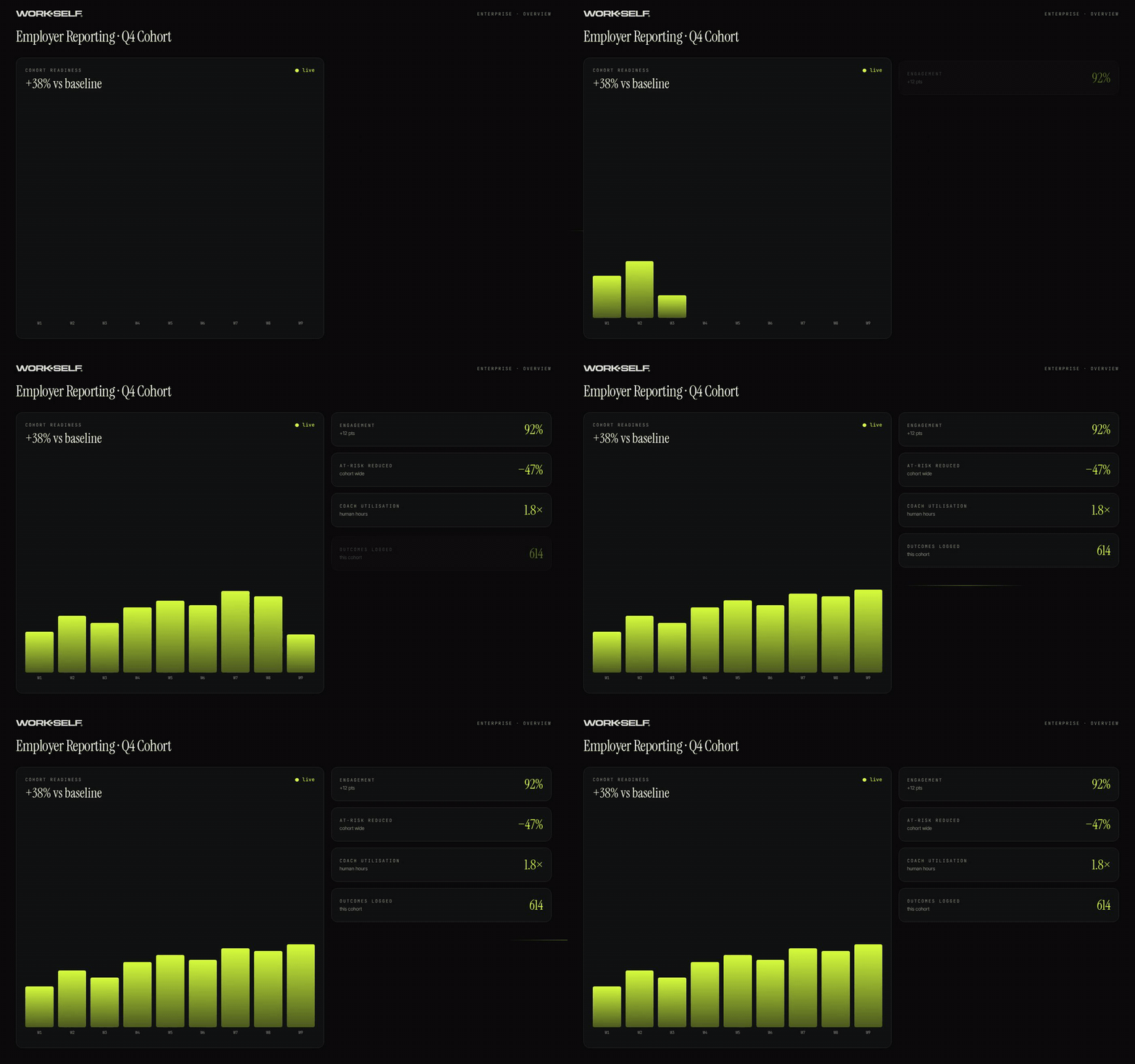
■ Internal mobility and role transitionMap AI-augmented role pathways
Maya identifies which employees can move into Agent Operations, AI Quality and Evaluation, Solutions Engineering, Customer Intelligence, and other AI-augmented roles based on more than skills alone: identity fit, readiness, motivation, and transition probability.

■ AI-human workflow orchestrationOrchestrate regulated AI workflows
Maya defines how humans and agents work together across product and engineering, customer success, and sales and go-to-market: what AI can draft, what humans must review, when a task escalates, and what context agents are allowed to use.
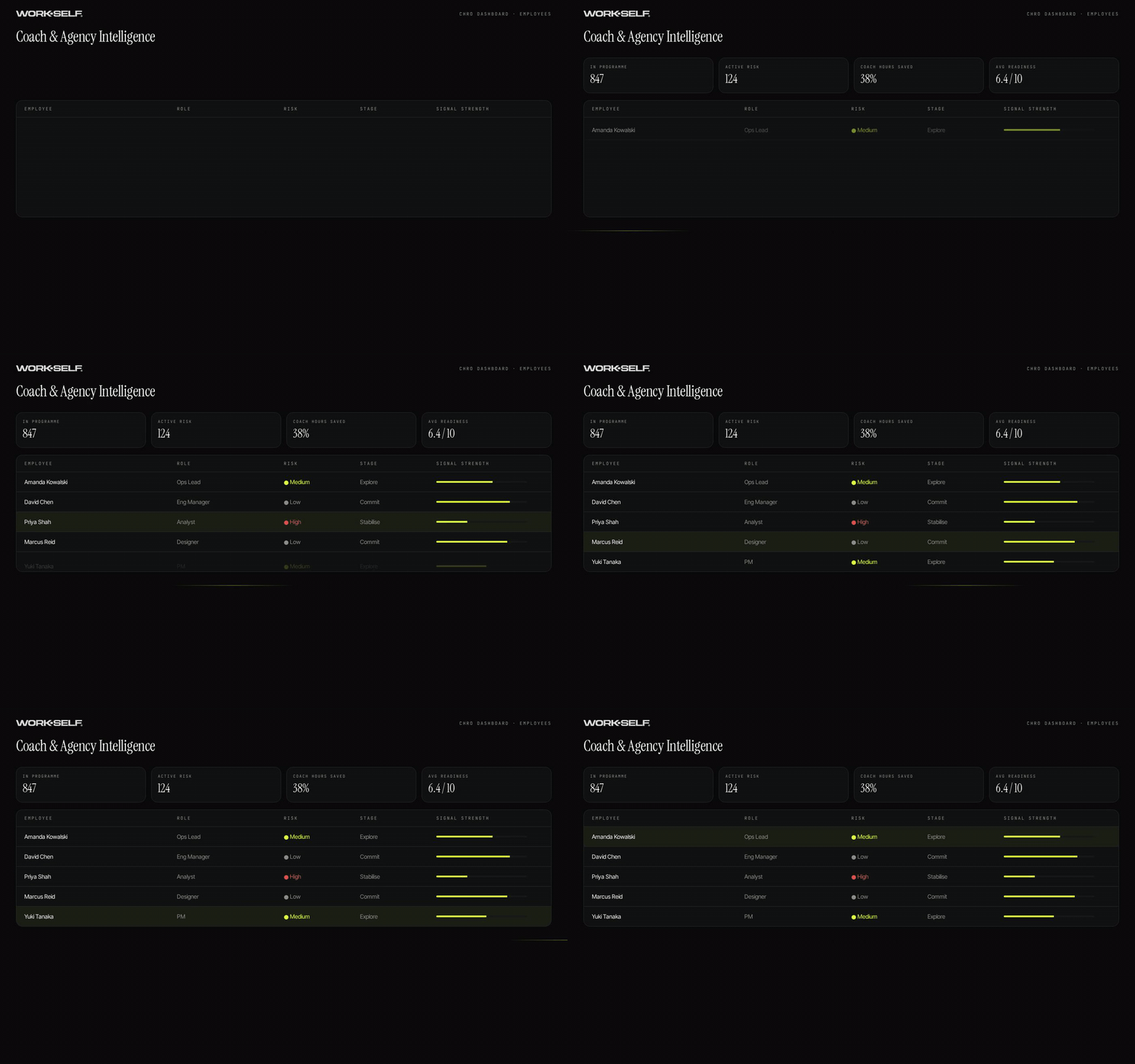
■ C-suite and manager visibilitySee readiness and intervention priorities clearly
The Transformation Dashboard gives leaders a board-ready view of transition velocity, headcount risk, organisational readiness, Maya coverage, risk-cost exposure, and cohort progress. Managers see who needs support and what intervention should happen next.
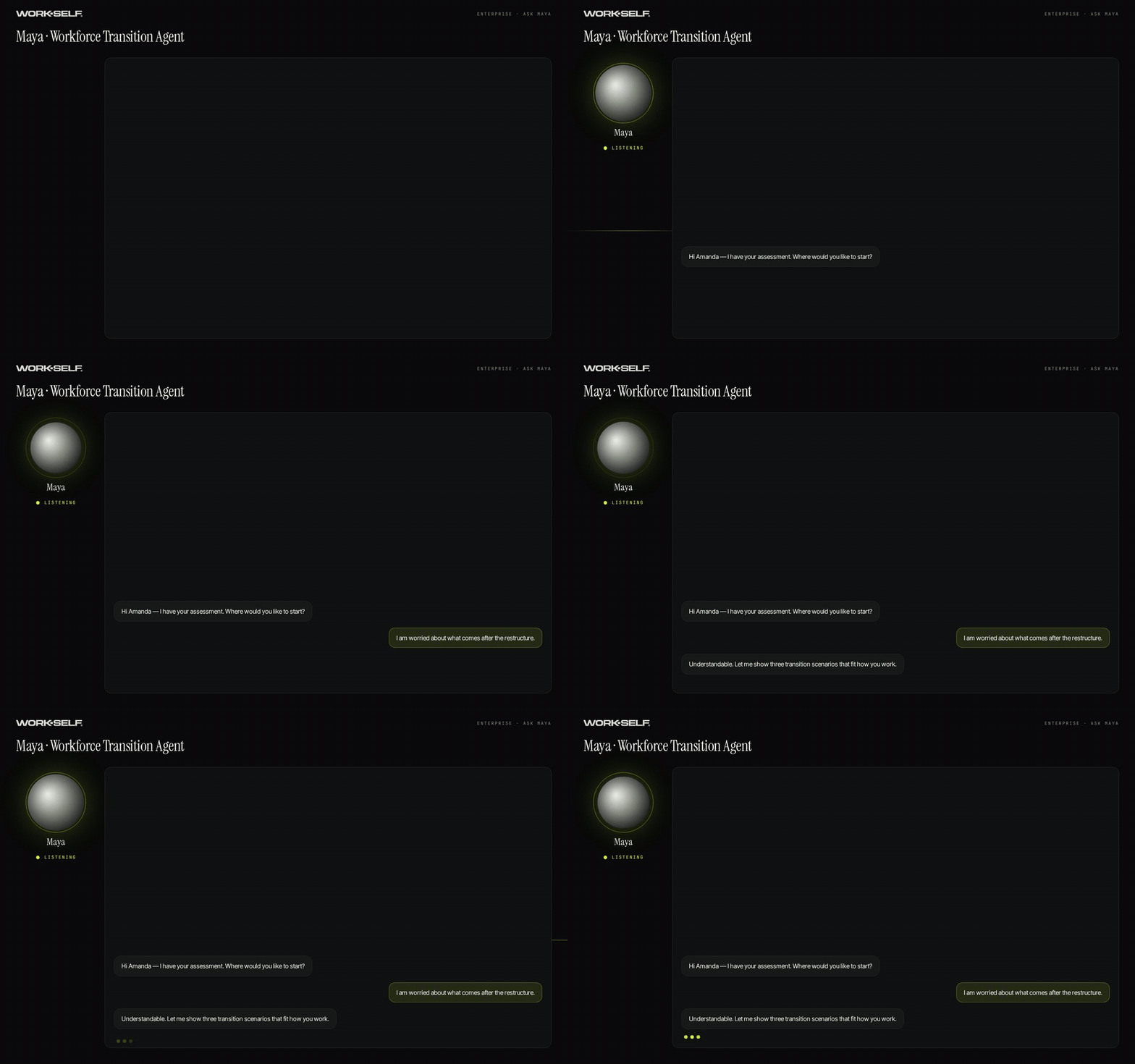
■ Governed human contextProtect trust while improving agent collaboration
Maya translates employee identity and work preferences into operational context, not surveillance. Employees should understand what is used, managers receive support signals, and approved agents receive only task-relevant context with auditability and boundaries.
Turn agent output into accepted work, not extra work.
Start with one affected cohort or one workflow. Maya shows who is ready, who needs support, where internal mobility exists, and how AI should collaborate with the humans accountable for judgment, quality, and customer trust.
Explore a partnership
If you’re interested in piloting WORK-SELF in your organisation, we’re happy to explore what a partnership could look like.